
Mangalagiri Sarees

MANGALAGIRI SAREES HISTORY

The Mangalagiri sarees have a history of more than five centuries. long before the sarees got popularised, Mangalagiri was famous for its pilgrimage .The temple of Lord Panakala Narasimha Swamy is located in the centre of the town and is believed to have been there since the Satya Yuga. It is said that under the present temple lies the former Lakshmi Narasimha Swamy temple, the one in which the main idol was installed by Yudhistira. In around 1593, during the rule of Qutub Shahi, heavy taxes were imposed on the handloom sarees of this region. As a result of this, the weavers started to move out of this town and started settling in other handloom centres of the state. This affected the weaving activities of this town. Later, the succeeding rulers of this region opted for more sympathetic practices and reduced the taxes.

PRESENT STATUS
OF MANGALAGIRI ARTISANS

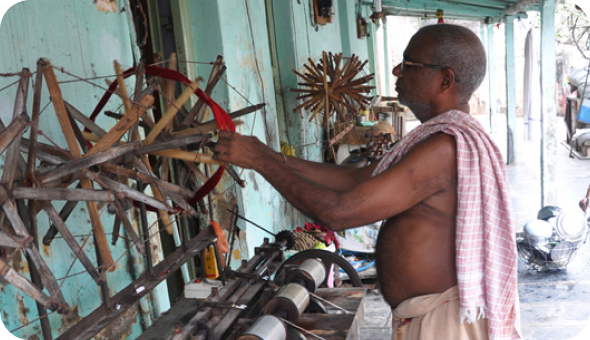
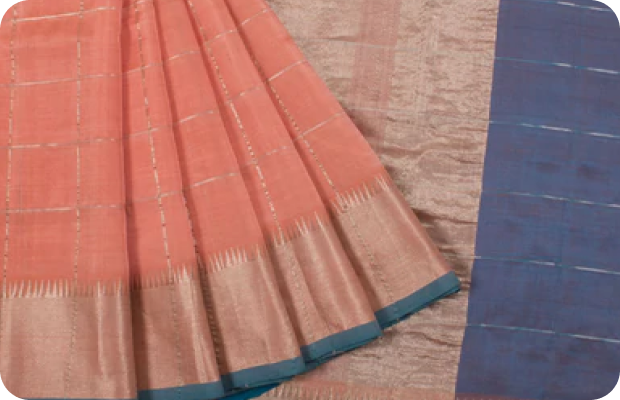
Handloom weaving is the prime occupation of Mangalagiri town. More than half of the population is dependent on the cottage industry for their living. As the global demand is increasing, this weave can now be found on kurtas, dupattas and stoles. Nizam-Zari borders are pretty popular for sarees. They also make customize designs and motifs with multiple colors for sarees and dresses with the help of chhota dhabi and bada dhabi (motif making machine). Similarly, they use natural dyes now instead of chemical dyes because of the increasing demand of natural dyes. Most varieties of Mangalagiri sarees are aged back to 200-300 years other than some recently developed sarees like ‘muthaka’, ‘silver-jeri’ and nizam border sarees.

READ MORE
Demands
Demands

MODERN DEMANDS AND CHANGES

Getting raw materials for the production is also becoming difficult. Government provides an amount only to the owners / heads of these societies and not to the workers who do most of the work. 80% of the workers don’t even own a home. The brand that sells them cotton as raw material isn’t loyal to them. They keep hiking prices and ignore the artisan’s demand for specific ‘yank yarn’. The brand focus more on exporting the materials as there is an overseas demand for it. There is a constant hike in the yarn rates for 4-5 months now. Recently, yarn was sold in Rs. 200 for 4.5kgs. no price limits setting on yarns by either central or state government. This leads to indirect increase in the price of saree by Rs (100-150).
Speciality
distinguish

BLOGS

slider