
PROFILE
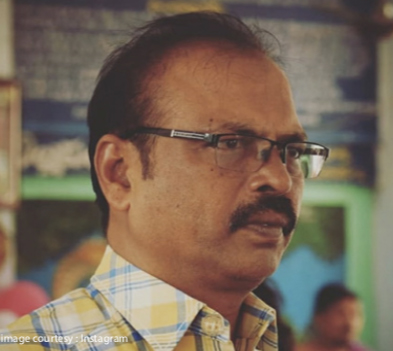
Mr Ganji Ravindranath was born in Mangalagiri, Guntur District, Andhra Pradesh, in February 1961. His residence is in the weaver's colony. This proud father of one runs a handloom store with his siblings (three brothers and two sisters) that sells excellent Mangalagiri sarees and textiles. He has been in business for over 45 years. Mr Ganji Ravindranath was born into a family of excellent weavers who have contributed over 100 years to this craft, so it was no surprise that he took an early interest in it.
He went to school and completed his secondary education. He learned the techniques from his father as an apprentice. With practise, he got more adept at the procedures. Mr Ganji Ravindranth is a firm believer in the importance of producing genuine handloom sarees and employing weavers. In Mangalagiri town, he is known as a Master Weaver and has employed about 1200 people, both men and women.He even owns a loom where he employs nearly 10 weavers over the age of 35, despite the government's reduced assistance in the handloom sector, with no help or benefits, he expresses his concern that the craft will die a slow death in less than 10 years due to the young weavers' constant reluctance to take up weaving as a career option.
Mangalagiri sarees and textiles have enabled him to support his family while working. The government pays him 24,000 rupees a month, and he addresses the issue that the government does not provide anything to the workers who work for him. Mr. Ganji Ravindranath participated in a 1994 show in Delhi. He has also participated in shows in Ahmedabad, Bombay, and other cities. He provides FabIndia, Reliance, and Tata with fabric and sarees. Since 1994, he has done business in Delhi for a few years. Presently, he is a supplier of sarees, dupatta and running fabric to Fab India, nationwide. He has over 300 to 400 wholesale and retail clients now. He has started out online because after the pandemic now. He was also sent to Malaysia by the central government to participate in an exhibition there for 10 days.
Mr Ganji Ravindranath is an industrious man with a beaming smile. He is keen to see the de- velopment of the Mangalagiri sarees and textiles and see the new generation to take up this craft. He hopes that the younger generation will recognise their efforts and popularise the craft with the global community.
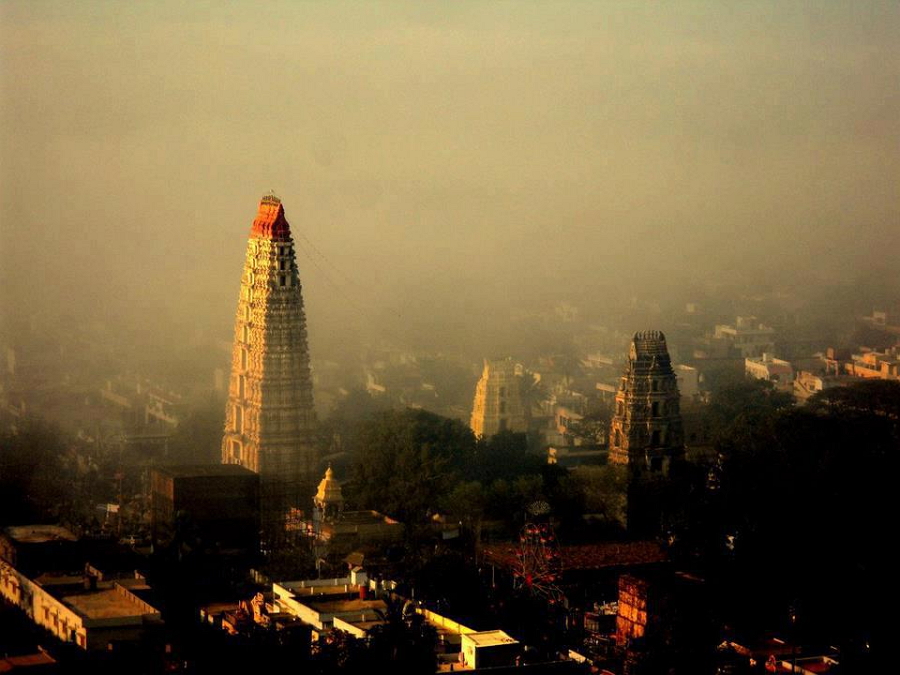
Mangalagiri is a town, and a mandal of Guntur District. The town was known to have existed since 225 B.C. It is a major suburb of the Vijayawada .the town is also part of vijayawada metropolitan area . It is currently the 31st most populous city of Andhra Pradesh. The town is the headquarters of Mangalagiri mandal under Guntur revenue division. This town is best known for the temple of Sri Panakala Lakshmi Narasimha Swamy. This temple is dedicated to Lord Narasimha(man-lion) and is situated on a hillock at Mangalagiri.Ten villages namely Chinakakani, Kaza, Nutakki, Chinavadlapudi, Pedavadlapudi, Ramachandrapuram, Atamakuru, Nowluru, Yerrabalem, Nidamarru, Bethapudi are merged into Mangalagiri Municipality.
Mangalagiri is a town, and a mandal of Guntur District. The town was known to have existed since 225 B.C. It is a major suburb of the Vijayawada .the town is also part of vijayawada metropolitan area . It is currently the 31st most populous city of Andhra Pradesh. The town is the headquarters of Mangalagiri mandal under Guntur revenue division. This town is best known for the temple of Sri Panakala Lakshmi Narasimha Swamy. This temple is dedicated to Lord Narasimha(man-lion) and is situated on a hillock at Mangalagiri.Ten villages namely Chinakakani, Kaza, Nutakki, Chinavadlapudi, Pedavadlapudi, Ramachandrapuram, Atamakuru, Nowluru, Yerrabalem, Nidamarru, Bethapudi are merged into Mangalagiri Municipality.
The production of handcrafted dyed fabric is the major occupation of the town, which is as old as 500 years. Mangalagiri Sarees and Fabrics was registered as one of the geographical indication from Andhra Pradesh.
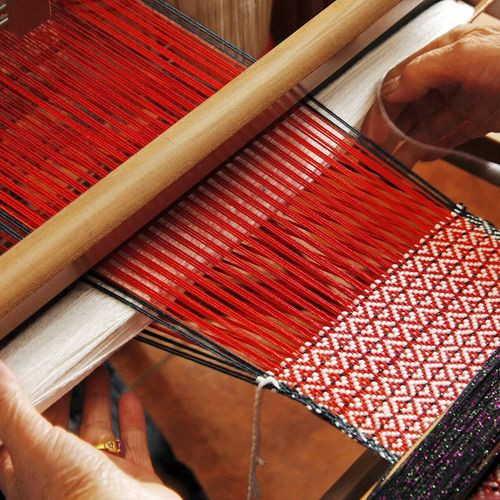
The production of the Mangalagiri sari includes different stages which includes:-
Raw materials – pure cotton yarn, silver and gold zari's, synthetic and natural dyes and some chemicals.
Cotton purification – This process involves boiling of hank cotton to remove certain impurities, soaked overnight, rinsed and made suitable for dyeing process.
Dyeing – it involves bleaching technique for white saris and for colored ones, Vat dyes are used.
Removal of excess dye – dyed or bleached yarn undergoes soaking in boiling water with some techniques to cut out excess dyeing.
Drying – after the above process, the yarn is dried and also adds light sensitive colors in shades Pre-loom process.
Winding of hank yarn into warp and weft – charka, shift bamboo and bobbin are used to form warp. While, the weft is made with help of a pirn. Street sizing – the warp extension, spraying of rice conjee ensures suitable weaving followed by drying. Weaving process – it involves Warp and Weft method of weaving and sometimes replaced by Jacquard weaving. Usage of only pitlooms for weaving, designing and cutting per the goods demand undertakes Cutting & folding – woven cloth undergoes cutting per the goods demand Inspection of sarees – inspection by the master weaver to rectify flaws Marketing – the period of 1985 bought revolution with new market for dress materials than the saris
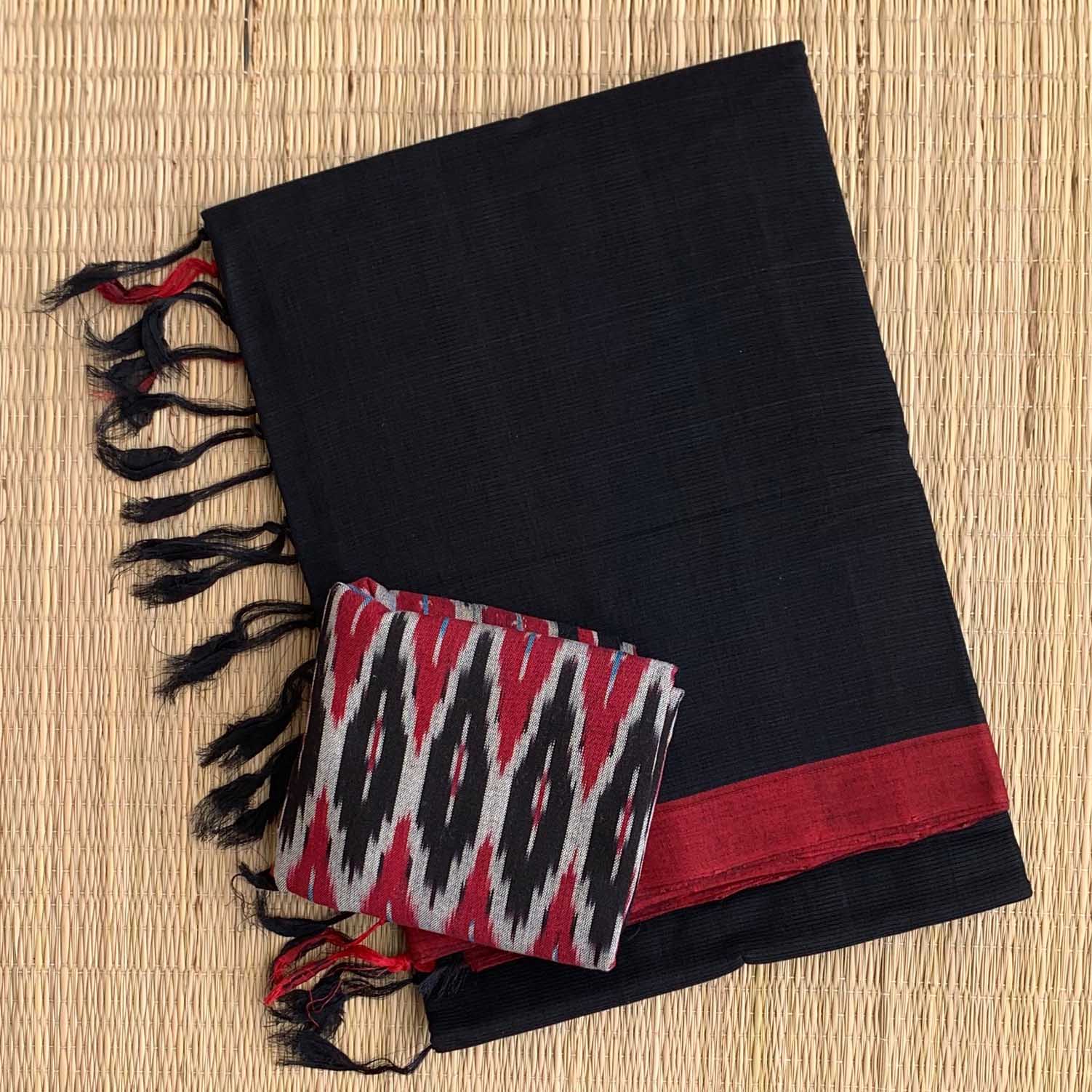
The occupation of weaving is as old as 400 years as per some inscriptions found at this region. There was a migratory period for the weavers during the rule of Qutub Shahi due to increase in taxes. It was registered as one of the handicraft in the geographical indication from Andhra Pradesh by Geographical Indications of Goods (Registration and Protection) Act, 1999.
It is said that as per the ancient traditions, the pilgrims had to purchase a sari from the local weavers after offering obeisance to the lord, which was another way of giving a livelihood to the local weavers. Thus grew the popularity of the Mangalgiri sari. The pillar is proof enough that the Mangalgiri handloom tradition has been a part of the town for more than five centuries. It is said that as per the ancient traditions, the pilgrims had to purchase a sari from the local weavers after offering obeisance to the lord, which was another way of giving a livelihood to the local weavers. Thus grew the popularity of the Mangalgiri sari. The pillar is proof enough that the Mangalgiri handloom tradition has been a part of the town for more than five centuries. It is said that as per the ancient traditions, the pilgrims had to purchase a sari from the local weavers after offering obeisance to the lord, which was another way of giving a livelihood to the local weavers. Thus grew the popularity of the Mangalgiri sari. The pillar is proof enough that the Mangalgiri handloom tradition has been a part of the town for more than five centuries.
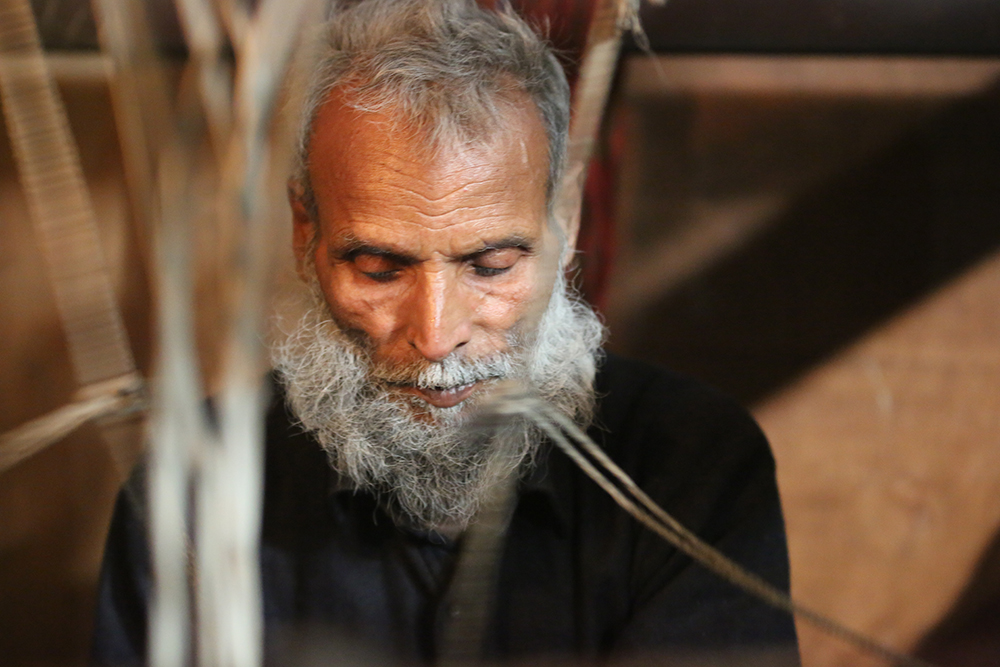
M. Bhaskar Rao is a forty six year old 3rd generation master artisan residing from the small town of Mangalagiri, Guntur district. M. Bhaskar Rao is an award winning, a highly experienced master artisan and is a prominent figure in Mangalagiri saree of Guntur region. He inherited the craft from his father as a young adult and has been practicing the craft for the last 35 years. His family consists of his father, himself, his wife and his two kids. While his father who is also a master artisan has stopped practicing the craft due to old age, his twenty three year old son Chetan hos inherited the craft and works full time with his father and looks over the entire operation, his little daughter goes to a nearby school and aspires to be at weaver, by looking at other young women in the village who has taken weaving as a full time work.
There are around thirty five weavers from Sarli and neighboring regions working under him currently. He provides these artisans with raw materials and required designs and collects the finished products which are exported internationally and picked up by different brands in the country. He works with brands like Fablndia, Amazon and international brands. M. Bhaskar Rao has been a part of many national and international exhibitions, and is very happy and proud of all the work he has done till now and how far he has come with his craft. It is because of M. Bhaskar Rao and the likes of others that the craft practice of Mangalagiri sharee is thriving in the small town of Mangalgiri.